#1: America's Most Trusted
Pause and Resume
Real Support, 7 Days a Week
Fastest Allowed by Law
No Hidden Fees

◉ California Traffic School: Q & A Part 1

trafficschoolonline-dev.plume.co.uk/

The pioneer in online driver improvement with over 1 million satisfied graduates … since 1998.

Find out more now!

Getting a ticket in California can be a hassle, but don’t panic! From figuring out how to contact the court to decide whether traffic school is the right option for you, we’re here to make it as easy as possible. Here are just a few of the many questions we get from drivers in California looking to make their tickets disappear!

Common California Traffic School Questions

Should I take traffic school before or after I pay my ticket?

You will need to pay your ticket and request the option to take traffic school from the court before you complete a traffic school course. After you do this, the court will give you a new due date that you’ll have to complete your traffic school course by.


If I still have to pay for my ticket, what’s the point of taking traffic school?

Getting a California traffic ticket is already expensive, but getting your license suspended or having your insurance company raise your premiums could be even more costly.

California uses a point system to keep track of traffic violations. Each type of traffic offense carries either one or two points. If you receive too many points in a certain period, your license could be suspended or revoked. In addition, points on your driving record can cause your insurance premiums to increase.

But as a result of completing traffic school, your court will dismiss your ticket, and the DMV will mask the violation on your record. This means that while the DMV will still know about your ticket, it won’t appear as points on your driving record, and it won’t be visible to your insurance company.

Still trying to weigh the costs and benefits? For more information about how your traffic ticket could affect your driving record, check out the California DMV’s list of points for each violation. You can also contact your insurance company to find out how points on your record would affect your insurance rates.


What if I have more than one ticket? Can I take traffic school for both?

You can take traffic school to have a violation dismissed once in any 18 month period. The 18-month period is counted from the date you received the last California ticket you took traffic school for to the date you received your current ticket.

So, if you’ve got two tickets right now, or two violations listed on the same ticket, you’re going to have to pick just one violation to have dismissed by taking traffic school.


What if I decide to fight the ticket? Will the court dismiss it if the officer doesn’t show up? Will I still be able to take traffic school if I’m found guilty?

Pleading not guilty to your violation, also known as “fighting” or “contesting” the ticket, is also an option. In most cases, you can contact your court to ask for a court trial or a trial by written declaration. The court may require you to pay your fine amount in advance, which will be held as bail and later returned to you if you are found not guilty.

If the officer who issued the ticket does not appear in court, it’s possible that the court will dismiss your ticket. However, it’s best not to rely on that option.

Instead, be prepared to defend yourself in case the officer does show up. You can either defend yourself or hire a lawyer. The officer will explain to the judge why they gave you the ticket, and you or your lawyer will be able to present evidence, argue the law, bring witnesses, and question the officer.

If you are found guilty, it will be up to the judge whether to offer you the option to go to traffic school.


How do I contact my court?

After you get a ticket, you may find yourself needing to contact the court. Before you resort to waiting in line at the courthouse or navigating through a maze of automated recordings in the court’s phone system, check to see if the information you need is available through your court’s website.

Many courts have an online case lookup system that you can use to locate your citation, pay your ticket, request traffic school, or even request a due date extension. Some courts also have this type of system available by phone.

If you do have to speak with someone at the court, check online for their traffic department phone or window hours so you don’t waste your time. Some courts are extremely understaffed, and clerks may only be available to the public for a few hours each day.

Don’t see the answer to your question here?

First, check out our California FAQ page for information on our low-price guarantee, computer/system requirements, and what to do if you have a commercial drivers license. Then take a look at Part Two of our California Traffic School: Q&A series!

Still have questions? No problem. Give us a call at 800-800-3579 or drop us a line at questions@trafficschoolonline.com and we’ll be happy to help you find the information you need!

The United States is home to more than 212,000 highway-rail grade crossings. These crossings, where railroad tracks meet a highway, road, street, or sidewalk at the same level, are dangerous areas for drivers and pedestrians alike.

Here where we at trafficschoolonline-dev.plume.co.uk/ live and work, the old track is being replaced or rehabilitated as part of our area’s first passenger rail project since 1958. Just north of us, freight trains have returned after ten years’ absence. This means we’ll be watching out for trains rolling through crossings where they haven’t been seen in decades.

And we’re not alone. Cities like San Francisco, Los Angeles, Dallas, Phoenix, and Washington DC, are implementing and expanding commuter rail and streetcar systems. Freight rail, much of it carrying shale oil from North Dakota, is booming to such a degree that congestion and delays are impacting farm shipments and Amtrak passenger service across the country.

With all this action on the rails, it’s more important than ever to make sure you know how to stay safe near railroads and at crossings, whether you’re in a car or on foot.

Rail Crossing and Trespassing Fatalities Increased Last Year

Railroad crossing safety has improved dramatically in past decades, but there is still work to be done.

Even as rail activity increased, fatalities at highway-rail grade crossings dropped 79%, from over a thousand in 1976 to 233 in 2012. But from 2012 to 2013, highway-rail grade crossing deaths rose to 250, and railroad trespassing deaths rose from 429 to 476, while the overall rail accident rate fell. The Federal Railroad Administration has explained that construction near train tracks and increased vehicle and pedestrian traffic can cause these numbers to fluctuate from year to year, which may explain some of the increase.

Still, railroad trespassing remains the leading cause of rail-related fatalities. Together, railroad trespassing and highway-rail grade crossing deaths make up 95% of all rail-related deaths – most of which are preventable.


Ways to Stay Safe

No Trespassing

  • Most trespassing deaths involve pedestrians who cross the tracks at locations other than designated crossings, or who walk on or next to the tracks.
  • Trains overhang the tracks by three feet or more on either side, and any loose straps hanging from railcars may extend further. Walking, bicycling, or riding an all-terrain vehicle or snowmobile in this area is extremely dangerous.
  • Never walk out on a train trestle. If a train came, you would have nowhere to go.
  • The only legal and safe place to cross is at a designated public crossing.

Never Risk Getting Stuck on the Tracks

  • Never try to beat a train across the tracks. Trains travel very quickly and can take over a mile to stop. Even if it looks like you could make it, the consequences if you’re wrong or if you get stuck on the tracks are too severe. If you can see a train coming, wait!
  • Never proceed across railroad tracks unless there is enough room on the other side of the crossing to fit your vehicle safely. Never stop on the tracks.
  • If your vehicle stalls on the tracks and a train is coming, get out of the car and run away from the tracks in the direction the train is coming from to avoid being struck by debris when the car is hit.
  • If you are riding a bike, get off and walk it across the tracks to avoid the risk of falling or getting a wheel stuck.
  • Pay attention to where you put your feet as you walk. Wet weather can make tracks slippery, so step over them instead of on them.

Always Look and Listen

  • Always expect a train. Many trains don’t operate on a schedule, so there is never a safe time to be on or near the tracks.
  • Know your signs and signals, and pay attention to them as you approach a crossing. According to the Federal Railroad Administration, more than half of all crossing collisions occurred where active warning devices such as lights, bells, and crossing gates were installed and operating correctly.
  • Make sure to look and listen for the train itself. Nearly a quarter of all crossing collisions are caused by a vehicle driving into the side of a train already in the crossing.
  • Take out your headphones, or turn off your music and roll down your headphones so that you can listen for an approaching train.
  • After a train has passed, look and listen again for a second train.

Looking for More?

Check out Operation Lifesaver for more information on safety near train tracks and at crossings. You can also request an Operation Lifesaver presenter who will provide safety information tailored to your specific group, from students to professional truck drivers.

The Federal Railroad Administration offers even more information on highway-rail grade crossings and trespass prevention.

car vs train

If you’ve ever wondered whether the officer who pulled you over was just trying to meet a quota, you’re not alone. A quick internet search reveals that lots of us are asking that same question.

Maybe an officer nabbed you for going just a little over the speed limit and ignored someone driving much faster, or perhaps you always notice extra police activity during the last few days of the month.

While it often seems like a quota might be in place, the truth isn’t quite so straightforward.

Traffic Ticket Quotas Under Scrutiny

Some states already have laws banning ticket quotas, and even more are being implemented this year.

Just last week, Illinois Governor Pat Quinn signed a bill prohibiting police departments from setting traffic ticket quotas and from comparing officers’ ticket numbers when deciding promotions and raises. The law took effect immediately.

Days later, New Jersey Assemblyman Declan O’Scanlan announced that he would introduce a similar bill, and another in Oklahoma has already passed the legislature and is now awaiting Governor Mary Fallin’s signature.

Illegal Ticket Quotas

But state laws don’t always deter police departments from trying to impose quotas – sometimes under the guise of maintaining a “station average” – and embroiling themselves in controversy.

Quotas have been prohibited in California for ten years (In California, under the Vehicle Code, Section 41602, it is illegal for an agency to put an arrest quota on any peace officer or parking officer whether a state or local officer), but police departments are even now facing lawsuits from their own officers alleging that ticket quotas are in effect and are being used to evaluate performance. The city of Los Angeles paid a $2 million settlement in 2009, and a $6 million settlement in 2013, both to its own officers. Another case was settled just this year against the city of Paso Robles for an undisclosed amount.

Florida’s law banning ticket quotas only applies to state law enforcement agencies, such as the Florida Highway Patrol, but even the FHP has come under fire for allegedly firing an officer for not writing enough tickets in 2009.

Police departments in Pennsylvania and New York have also been criticized for alleged use of quotas in violation of state law.

Ticket Quotas Undermine Public Trust

Anyone who’s ever received a traffic ticket knows that it puts a good chunk of your hard-earned money in the police department’s pocket. With many city police departments across the country facing budget cuts in recent years, it’s no wonder city officials and department management might be feeling pressure to raise more money and pass that pressure on to their officers.

Police departments in Illinois who argued against the recent bill said that the new law would prevent management from establishing standards for officer performance and motivating officers to meet those standards.

But State Representative Jay Hoffman, who sponsored the bill, points out that it “does not prohibit evaluating an officer by points of contact” including traffic stops, warnings, and arrest, but “just prohibits mandated ticket quotas.”

Police unions and lawmakers in Illinois maintain that quotas take away police discretion and put the focus on arbitrary numbers rather than on public safety. Getting rid of quotas, they say, will enable officers to better protect the public, and boost the public’s trust in law enforcement.

trafficschoolonline-dev.plume.co.uk/

The pioneer in online driver improvement with over 1 million satisfied graduates … since 1998.

Find out more now!

In last week’s post, we looked at how Dallas, Las Vegas, and Los Angeles are handling traffic congestion by building new roads, implementing adaptive traffic signaling, and improving mass transit. Being stuck in traffic is a huge pain, but is avoiding it really worth these huge costs?

In a word – yes.

Traffic congestion itself is extremely expensive. As cars idle around the nation, we’re wasting an astonishing amount of time, fuel, and money. And the problem is only expected to increase as our population grows, employment increases and fuel prices remain high.

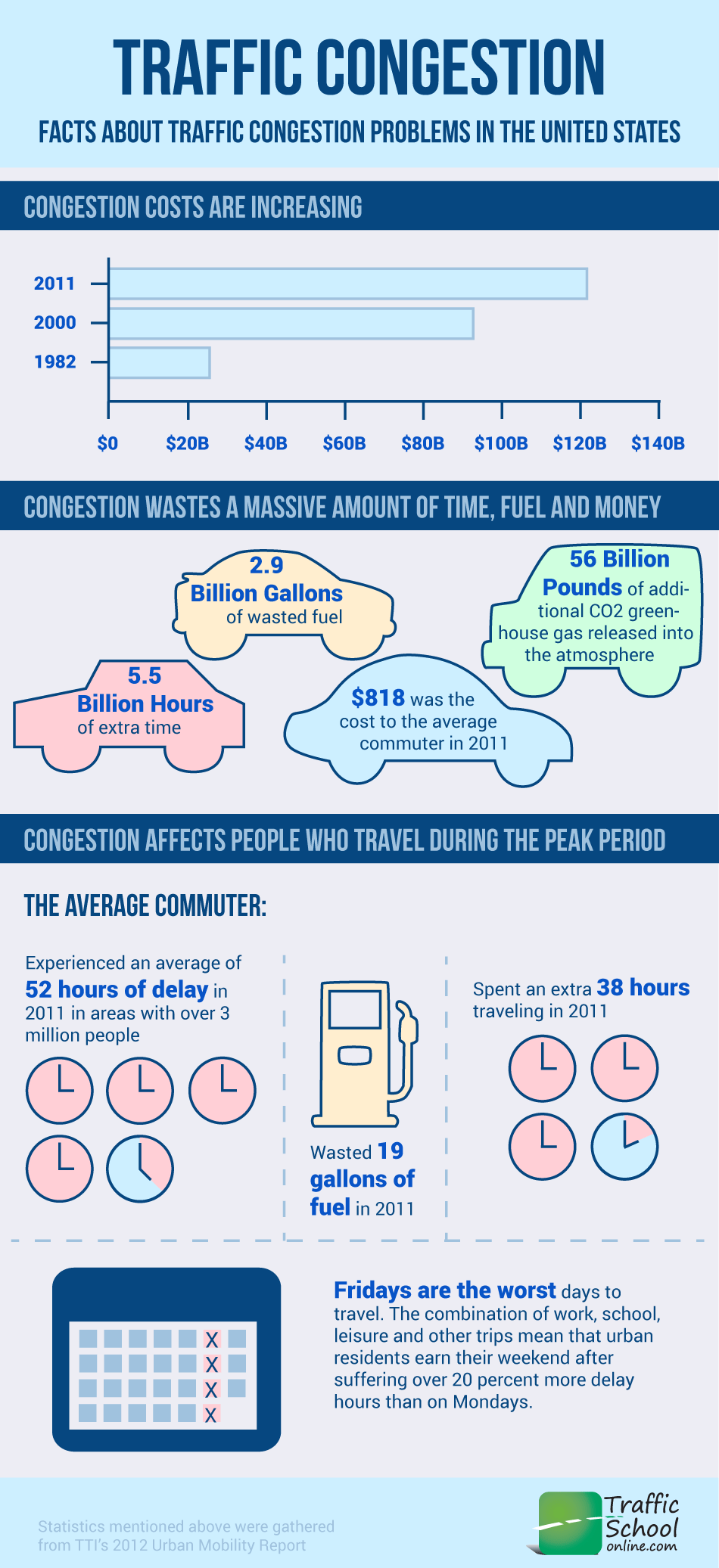
To find out what traffic congestion is costing us right now, check out the infographic below.

Click the infographic to view a larger version.

Traffic Congestion Infographic

Costs related to traffic congestion are increasing. In 2011, the costs were over $120 billion. Traffic congestion wastes a massive amount of time, fuel, and money. It wastes 5.5 billion hours of extra time and 2.9 billion gallons of fuel. The cost to the average commuter in 2011 was $818.

No matter where you drive, chances are you’re familiar with traffic congestion. Stop and go, bumper to bumper, gridlock, bottlenecks, rush hour… we have a wide vocabulary for describing the specific traffic situation that’s holding us up.

But unfortunately, the problem is bigger than we can see from our vantage point on the highway, and it’s not going away anytime soon. According to the 2012 Urban Mobility Report published by Texas A&M University, congestion levels are expected to increase beyond the peak reached in 2005, before the economic recession.

So what are transportation planners doing to manage the increasing number of drivers who want to use the overcrowded highway system?

PBS tackles this question in Nation on the Move, the second episode of their 2012 America Revealed series. The show focuses on three cities, each with a unique congestion situation, and a different approach to managing the problem.

Please note that the first portion of the episode covers rail and aviation, and the section on car traffic starts at 32:48.

Dallas, Texas

Highways between Dallas and Fort Worth, Texas fostered the creation of suburbs like Arlington and nearby Colleyville. As in many other areas of the country, these highways were designed to take suburban residents to jobs and stores in big cities. But now, people work and shop in the suburbs too, and barely travel into the city at all. At the same time, the area’s population has doubled, and the number of cars on the road has tripled.

The smaller secondary roads that exist within the suburbs weren’t designed to move these large numbers of cars, so these roads are being expanded, and new highways are being built to take suburban residents where they’re actually trying to go.

Las Vegas, Nevada

Las Vegas is a city of 2 million people which receives 36 million visitors per year. Rather than building new roads, transportation experts are monitoring traffic and adjusting the city’s 1,250 traffic signals to allocate “green time” as efficiently as possible and prevent too much traffic from backing up at intersections.

Los Angeles, California

Los Angeles, home to 12 million cars, doesn’t have “smart” roads like Las Vegas and has no room to build new roads, like Dallas. Instead, Metro transportation planners are looking to the past, hoping to revive the robust mass transit system that existed in the city before the 1940s. Old streetcar routes, previously abandoned in favor of bus lines and private cars, are now being reclaimed, rebuilt, and upgraded for modern light rail.

There’s a lot to keep an eye on as a driver – the road, your mirrors, your speedometer… and, of course, the price of gasoline. This is the second post in a three-part series on what’s driving gas prices, and how you can save at the pump.

In our last post, we talked about how seasonal factors like increased demand and the switch to summer blend gasoline combine to push gas prices higher in the spring and summer than at other times of the year.

But gas prices vary even more dramatically over the years and decades, as we can see in the graph below. Why do prices rise and fall so dramatically over time, and can we ever expect a return to lower gas prices?

To answer these questions, we need to find out what affects the price of crude oil. The cost of crude oil accounts for 67% of what you pay at the pump, compared to just 12% for refining, 9% for distributing and marketing, and 12% for taxes.

Demand and Prices Rise and Fall with Economic Growth

According to the U.S. Energy Information Administration (EIA), world economic growth is the biggest factor driving demand for oil. Increased economic activity brings an increase in energy-intensive activities like manufacturing, personal and commercial transportation, and increased vehicle ownership.

Worldwide demand grew so quickly in the years leading up to 2008 that suppliers had a hard time keeping up, bringing crude oil prices to record levels and driving the U.S. average retail gas price to its record high of $4.11 per gallon in July 2008.

But by the fall of 2008, the global economy was weakening. As economic growth stalled, global petroleum demand decreased, and in December gasoline prices fell to $1.69, or $1.89 in today’s dollars.

Geopolitical Events Disrupt Supply

Oil and gas prices are also affected by events that could disrupt the supply of these materials. Sometimes these events cause supply disruptions, creating a shortage. But even just a sense of uncertainty can be enough to cause a price change.

To show just how drastically geopolitical events can affect the price of oil, the EIA provides this graph of crude oil prices with major world events since 1970 marked on the timeline. For example, the Arab oil embargo in 1973, the Iranian revolution in 1978, the Iran/Iraq war in 1980, and the Persian Gulf War in 1990 all caused crude oil shortages, and all correspond to an increase in prices.

This summer, increasing tensions between Russia and Ukraine could threaten the movement of Russian natural gas and petroleum products through Ukraine and into Europe, and may cause an increase in prices.

OPEC Manages the Oil Market

The twelve member countries of the Organization of the Petroleum Exporting Countries (OPEC) produce more than 40% of the world’s crude oil, and hold at least two-thirds of the world’s estimated crude oil reserves, according to the EIA.

Because of this, OPEC can exert significant influence on oil prices by setting production targets for its member countries. Lower production targets typically mean an increase in oil prices.

OPEC countries also have “spare production capacity” – the ability to bring oil into production within 30 days and sustain it for at least 90 days. Spare production capacity provides a cushion for fluctuations in supply. When spare capacity is low, the market is less able to respond to potential supply disruptions, and oil prices tend to rise.

U.S. Oil Production and Exports Increasing, But No Return to $2.00 Gas

In the last presidential election cycle, candidates argued back and forth over the reasons behind high gas prices and how best to lower them. The idea was put forth that by increasing domestic oil production, we could get back to the low gas prices we had in 2008 in the midst of the Great Recession.

U.S. oil production is now climbing at its fastest pace since the late 1960’s. According to the EIA’s most recent report, oil production is expected to rise to its highest annual level since 1972 next year. With such a booming business, drivers may be hoping for relief at the pump.

Unfortunately, the experts at AAA say we’re in for disappointment.

Many U.S. refineries are sending their products overseas, to countries like Mexico and Brazil, where demand is rising and prices are better – total U.S. petroleum exports are up 25% compared with last year, and is expected to become a net fuel exporter by 2015. As a result, the supply available in the U.S. is relatively low, and prices remain high.

The possibility was even raised this week that the U.S. could start to export the crude oil it produces, which has been prohibited since the 1970s. While concerns persist that allowing crude oil exports could cause gas prices in the U.S. to climb, U.S. Energy Secretary Ernest Moniz has said that the nature and quantity of the oil we’re producing “may not be well-matched to our current refinery capacity.”

Looking for More Information?

The EIA provides a detailed analysis of what drives crude oil markets, with data updated monthly. You can also check out data on energy produced and consumed in specific countries or U.S. states.

There’s a lot to keep an eye on as a driver – the road, your mirrors, your speedometer… and, of course, the price of gasoline. This is the first post in a three-part series on what’s driving gas prices, and how you can save at the pump.

According to the latest analysis released by GasBuddy.com, the national average price of gas is finally starting to fall after reaching a peak of $3.657 at the end of April, expected to be the highest price we’ll see this spring. While this year’s peak is about 18 cents per gallon higher than prices from this time last year, it’s much lower than last year’s February peak of $3.74.

Analysts predict that prices will fall another 3 to 10 cents by Memorial Day, and are expecting the lowest summertime gas prices that the nation has seen in several years.

But why do gas prices peak in the spring at all? Is it just because people do more driving in the pleasant summer weather, or are there other reasons for the increase we see each year?

Higher Demand in Spring and Summer

Demand for gasoline in the U.S. does increase by a few percentage points per month, beginning in February. To put this in perspective, a 1% increase in U.S. demand for gasoline is about 87,900 barrels – about the same as what a small refinery could produce in a day.

These increases seem small, but they add up quickly. NACS, the Association for Convenience and Fuel Retailing, reports that gasoline demand in August 2013 was 10% – that’s 836 billion barrels – greater than it was in January 2013.

This added stress makes the fuel distribution system vulnerable to supply disruptions caused by geopolitical events or severe weather, which could cause gas prices to rise even further.

Summer Blend Fuel

Demand isn’t the only factor driving higher prices. The fuel you buy in the summer is more expensive to produce, and the process of making the switch limits the supply of gasoline even further.

Summer Fuel is More Expensive

Refineries and retailers are required by law to produce a special blend of gasoline for the summertime. Federal, state, and local laws overlap to create a complex set of requirements for each area, but in general, summer production begins in April and ends in September.

Winter-blend fuel is made to evaporate at lower temperatures so that your car will start more easily and run more smoothly in the cold. To accomplish this, refineries can blend in cheaper materials that evaporate more readily.

But fuel that’s just right for cold temperatures can cause problems in the summer. Evaporating gas contributes to ozone and smog levels and can cause vehicle performance problems like vapor lock.

To avoid this, summer-blend gasoline has to be refined even further. This means that each barrel of oil doesn’t make quite as much summer gasoline as it would make winter gasoline. It also has to contain materials that don’t evaporate as easily – which tend to be more expensive.

The summer blend is the most effective option for warm temperatures – it contains 1.7% more energy than the winter blend – but it’s more expensive for refineries to produce. So while you may get better gas mileage, the prices you see at the pump tend to be higher than during the winter months.

Refinery Maintenance Limits Supply

Refineries have to comply with summer regulations by April 1. Switching from winter to summer blends requires significant work and “downtime” at refineries, so companies often schedule other maintenance work for the same period.

Since refineries can’t operate at full capacity during this maintenance “season,” the supply of fuel decreases temporarily, contributing to the rising price.

Low Inventory at Distribution Terminals

It takes several weeks for summer gasoline to travel through pipelines and reach distribution terminals across the country, so terminals have until May 1 to purge their winter fuel. Since failure to comply with the requirements results in a steep penalty, terminals are more willing to risk not having any inventory than being late to comply.

These low inventories at the terminals also contribute to higher prices, especially as demand continues to increase throughout the season.

What Can We Expect for the Summer?

This year’s deadlines for refineries and distribution terminals to switch from winter to summer blends have now passed, and GasBuddy.com reports that 90% of scheduled refinery maintenance for this spring has been completed successfully.

As refineries and distribution terminals return to normal operations, the U.S. Energy Information Administration (EIA) predicts that national gas prices will average $3.61 per gallon from April through September.

Keep in mind that prices can vary quite a bit across the country – while a gallon of regular might cost you $3.47 this week in a state on the Gulf Coast, if you’re on the West Coast you’ll be looking at $4.06 for the same gas.

Curious about what’s going on in your local market? Check out AAA’s Fuel Gauge Report, updated daily.

Up Next…

American oil production is at its highest level in decades, but it’s been more than three years since the national average price fell below $3.00, according to AAA. Why are prices still so high, and can we expect a return to lower prices in the future?

Your vehicle’s tires play a crucial role in ensuring a safe and comfortable driving experience. However, they often go unnoticed until something goes wrong. According to the National Highway Traffic Safety Administration, tire-related issues contribute to about 80,000 accidents annually. Regular tire inspections can help you avoid becoming part of this statistic. Here are five signs that your tires need attention or replacement:

1. Worn Tread

Tire tread is essential for maintaining traction and preventing hydroplaning. Check the tread depth by inserting a quarter into the grooves with Washington’s head facing down. If the top of his head is visible, your tire tread is worn, and it’s time to invest in new tires. Additionally, watch for built-in wear indicators (solid lines of rubber across the treads); if these are visible, it’s also time for a replacement.

2. Uneven Wear

Uneven tire wear may indicate misaligned wheels, worn ball joints, or suspension issues. Inspect your tires for uneven wear patterns, particularly on the inner edges. If you notice white cords showing through worn areas, replace your tires immediately. To prevent uneven wear, consider investing in a quality set of all-weather General Tires from TireBuyer.com.

3. Cracking Sidewalls

Cracking or crazing on the sidewalls of your tires can indicate rot. This issue typically occurs when a vehicle is rarely used or left stationary for extended periods. If you notice sidewall damage, replace your tires as soon as possible to prevent a blowout. To protect your tires, use a tire protectant like Armor-All.

4. Tread Separation

Tread separation occurs when the tire tread detaches from the tire body. This issue is commonly seen on highways as discarded tire husks. While most prevalent in transfer trucks or vehicles with retread tires, it can happen to any tire. If you notice a split between the tread and the tire, replace your tires immediately to prevent a blowout.

5. Air Leak

Air leaks are often caused by a damaged or weak seal between the tire and the rim. If left unchecked, a significant air leak can result in a tire blowout at the rim and a loss of vehicle control. If a tire continually loses air and remedies like Fix-A-Flat or remounting the tire don’t resolve the issue, it’s time for a replacement.

If your vehicle’s handling changes suddenly or after hitting a deep pothole, have a professional inspect your tires and alignment. Address any identified damage promptly to ensure even tire wear and proper suspension system function.

Your tires are your lifeline on the road—regular maintenance and timely replacements help ensure a safe driving experience.

Adults experience a lot of anxiety, but there’s nothing quite like the anxiety that comes with a teenager getting ready to get their driver’s license. In this article, we focus on how parents can overcome the fear and anxiety that accompanies a new teenage driver.

Build Your Confidence by Building Their Driving Confidence and Skill

The best tactic to overcoming new teenage driving anxiety is to be confident that your teen is a safe and confident driver. The only way to truly accomplish this task is to educate your teen on the rules of the road and provide them with ample practice opportunities.

If your state doesn’t require a driver’s education course prior to receiving their learner’s permit, it is a good idea to sign them up for a voluntary driver improvement course for your state. These courses are typically offered both online and in person.

The course will teach them the basic principles and laws they need to become a safe driver, but only in-car training will provide your teen with the necessary experience. Many states require behind-the-wheel professional training once they receive their learner’s permit. If your state does not require behind-the-wheel training, it’s a great idea to have your teen take a course voluntarily to help build the confidence and experience needed to be a safe driver.

Once your teen has finished the driver’s education course and behind-the-wheel training, the rest is up to you. You are the one who will need to build the confidence in your teen driver and provide them with the experience necessary to be a safe driver so you can relinquish the car to them in complete confidence and not have to panic about their well-being on the road.

That is typically where the new teenage driver’s anxiety and fear come in. The best way to overcome your fears is to face them head-on. Tell your teenager what your concerns are and find a solution to overcome them. Identify the driving skill you are concerned about and have your teen practice and demonstrate that particular skill to you.

Remember, the key to overcoming new teenage driver anxiety is to ensure your teen has the experience necessary to be a safe and confident driver. Here are some steps you can take to build confidence in your teen driver.

1. Practice the Basics in an Empty Parking Lot

Find an empty parking lot where your teen can safely practice the basics of driving. Start with accelerating and braking, then move on to turning and parking. This controlled environment will help your teen become familiar with the car’s handling and build a strong foundation for their driving skills.

2. As Skill Increases, Move up to Larger, More Crowded Parking Lots

Once your teen has mastered the basics in an empty parking lot, take them to a larger, busier parking lot. This will help them practice their skills with other cars around and learn how to navigate more complex driving scenarios. Gradually increase the difficulty by having them park next to other cars and navigate through crowded parking areas.

3. Practice on Various Types of Road

Exposure to different types of roads will help your teen become a more versatile driver. Have them practice on asphalt, dirt, and gravel roads, focusing on how the car handles and how to safely brake and turn on each surface.

4. Drive on Roads with Varied Speed Limits

Practicing on roads with different speed limits will help your teen understand how the car feels and handles at various speeds. Start with slower residential streets and gradually progress to busier roads with higher speed limits.

5. Practice Driving in Different Weather and Visibility Conditions

Weather and visibility play a significant role in driving safety. Make sure your teen practices driving in rain, snow (if applicable), and at night. This will help them learn how to adjust their driving to different conditions and gain valuable experience in real-life situations.

6. Focus on Entering and Exiting Freeways

Freeway driving can be intimidating for new drivers. Start by having your teen practice entering and exiting freeways in less congested areas during off-peak hours. This will help them build confidence and learn how to merge, maintain speed, and exit safely.

7. Drive Often in Controlled Environments

Regular practice is key to developing and maintaining driving skills. Encourage your teen to drive almost every day, even if it’s only for a short stretch of road or a limited time. This consistent practice will help reinforce their skills and boost their confidence behind the wheel.

Continue Practicing, Even Once They’re Licensed

Once your teenager is licensed, the best way to feel better about their safety is to give them a chance to demonstrate their driving skills and driver’s responsibility. Consider letting them take the wheel the next time you head out to a restaurant for dinner. The state trusts them to drive. It’s only fair that you do, too. The more they apply their driving knowledge and skills, the safer everyone will be.

As long as you continue to educate your teen on the rules of the road, they will continue to learn and develop their defensive driving skills, allowing both of you to be more confident and less fearful of their driving.

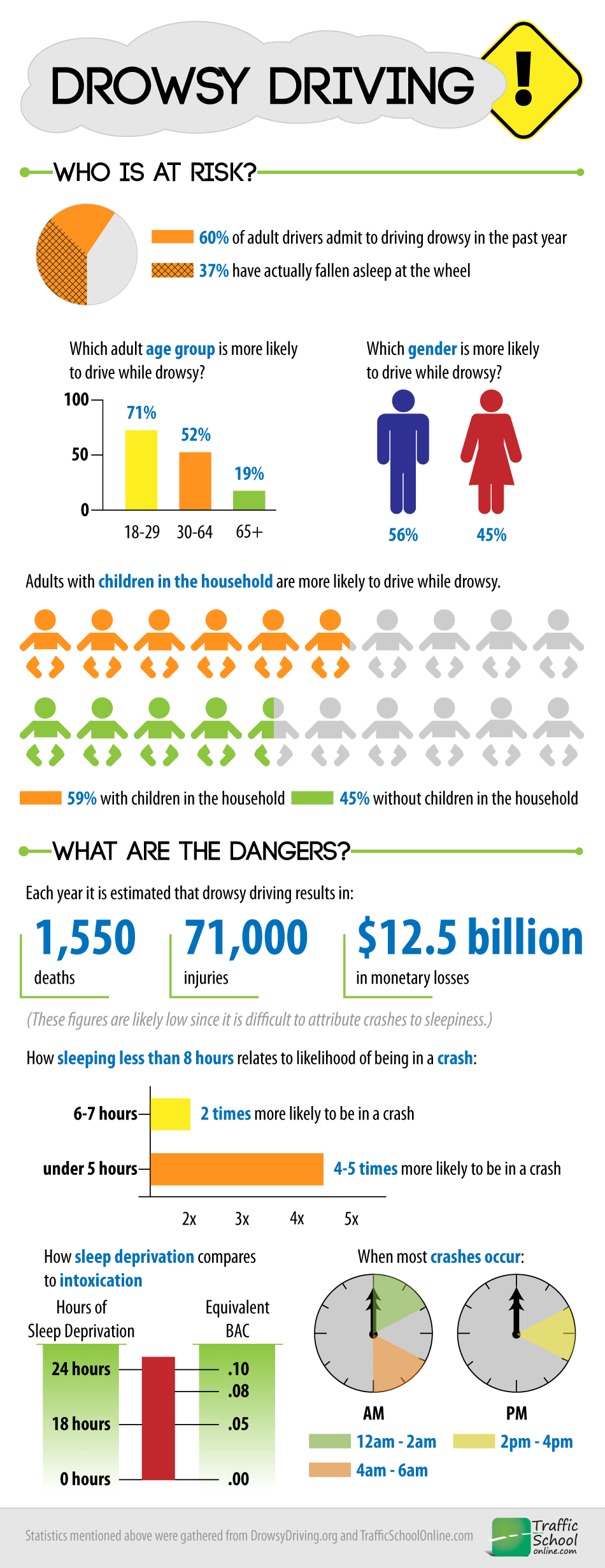
Drowsy driving can be much more dangerous and occurs more often than most people realize. Driving while drowsy can even become just as dangerous as driving while intoxicated.

Click on the infographic below to view a larger version.

Drowsy Driving Infographic

Everyone can be at risk of driving while drowsy. 60% of adult drivers actually admit to driving drowsy in the past year. 37% have actually fallen asleep at the wheel. The 18-29 year old age group is most likely to drive while drowsy and men are slightly more likely to drive while drowsy than women. Adults with children in the household are more likely to drive while drowsy.

Each year it is estimated that drowsy driving results in 1,550 deaths, 71,000 injuries, and $12.5 billion in monetary losses. And keep in mind that these figures are likely low since it is difficult to attribute crashes to sleepiness.

Sleeping only 6-7 hours makes it two times more likely to be in a crash and sleeping under 5 hours makes it 4-5 times more likely. Most crashes occur between 12 am – 2 am, 4 am – 6 am, and 2 pm – 4 pm.