
#1: America's Most Trusted
Pause and Resume
Real Support, 7 Days a Week
Fastest Allowed by Law
No Hidden Fees

◉ Obey Distracted Driving Laws to Save Lives

Thanks to the various electronic gadgets available for drivers today, such as GPSs (global positioning systems), mobile phones, and other devices, driving is much simpler than it was years ago. On the other hand, modern technology has also been detrimental because it often causes distractibility while driving. As a result, more and more traffic accidents have occurred, with some of them involving fatalities.

Tragically, each day, about nine Americans lose their lives from distracted driving crashes, with over 1,000 more suffering from injuries. Simply put, distracted driving is driving while being preoccupied with other actions besides driving, such as talking on a cell phone, texting, and other distractions that can divert a driver’s focus away from the road. This growing problem has led to states enacting distracted driving laws. Here’s what you need to know about the three types of distracted driving laws and how an online traffic school is beneficial.

The Three Main Types of Distracted Driving Laws

  • All Cell Phone Use—Although no state prohibits using cell phones while driving for all drivers, there are 38 states, along with D.C. (District of Columbia), that ban cell phone use by novice or beginning drivers. Also, D.C. and 20 states prohibit school bus drivers from using cell phones.
  • Using Hand-held Mobile Phones—There are 15 states as well as D.C., Guam, Puerto, and the U.S. Virgin Islands that ban all drivers from the use of hand-held mobile phones when driving. Hand-held cell phone laws are known as primary enforcement laws and pertain to when a police officer is allowed to cite a driver for using hand-held cell phones when the driver is not breaking any other type of traffic law.
  • Text Messaging While Driving—The state of Washington led the way in being the first state to pass a ban on texting while driving, which was in 2007. Today, 47 states and D.C., besides Guam, Puerto Rico, and the U.S. Virgin Islands, have followed in Washington’s footsteps in prohibiting text messaging for all drivers. Two of the three states that don’t have a ban on all driver texting do prohibit novice drivers from text messaging.

Forms of Driving Distractions

There are three primary forms of driving distractions.

  • Cognitive distraction refers to when drivers aren’t mentally focused on driving but are preoccupied with other concerns.
  • Visual distractions are when drivers take their eyes off the road and look at distractions, such as a radio, or check to see if a child’s seat belt is buckled.
  • Manual distractions occur when drivers remove one or both of their hands from the steering wheel for whatever reason, such as drinking, eating, or grabbing an item from a bag.

Top Causes of Distracted Driving Accidents

  • The main cause of distracted driving is being lost in thought as this problem accounts for 62 percent of driving fatalities. This entails drivers allowing their minds to drift which can lead to a collision and result in death.
  • Cell phone use, which causes 12 percent of deaths, is the second leading cause of traffic deaths linked with distracted vehicle accidents.
  • The third top reason for drivers getting distracted is drivers gawking at an object, person, or happening that takes place outside of their cars. About 7 percent of accidents are caused by this problem.
  • Additional causes include interactions with other occupants, using or trying to access items in a vehicle, eating or drinking, adjusting temperature controls, audio or other devices to operate a vehicle, moving objects, and lighting a cigarette.

Considerations and Warnings

Know the particular distracted driving laws that pertain to your state.

  • Regardless of how long you’ve been driving, you should never get to the point where you feel too complacent or comfortable when behind the wheel. Complacency is the main reason for drivers thinking they can take their focus off the road.
  • Fatigue, frustration, and rushing are common factors for drivers failing to focus on the road.
  • Don’t drive and multitask.
  • Even sending a simple, one-word, text message, such as “yes,” can put you at risk for accidents.
  • Because texting while driving entails all three forms of driving distractions, it’s especially hazardous.
  • Instead of setting up your GPS while driving, program it before leaving for your destination.

Sometimes, even the best drivers get traffic citations. To learn more about Traffic School Online and how our online traffic school can help in reducing insurance costs and dismissing traffic citations, please contact us.

When you have a new driver in the family, one of the most important things to do is raise their confidence level. While you don’t want them to do anything foolish like trying to text and drive or driving in weather conditions that are unsafe, you do want to raise their confidence and inspire them to feel comfortable behind the wheel. These five strategies will help your new driver feel more confident, enabling them to tackle on-the-road challenges without a problem.

1. Stay calm.

When you ride together, resist the urge to slam your foot into the invisible (and absent) brake on your side of the car or to reach for the wheel every time your child drifts a few inches away from the center of the lane. When you are calm and confident in your child’s driving abilities, you’ll quickly discover that their confidence increases, too! An uneasy parent, however, can destroy a child’s confidence behind the wheel and make it hard for them to manage unexpected challenges.

2. Look for opportunities to build their experience without overwhelming them.

Do you need something from the gas station at the bottom of the hill? Send your new driver to pick it up. Need the car moved from the garage to the driveway? Your new driver can take care of that! Allowing your new driver to take care of small errands accomplishes two key things. First, it gives your new driver plenty of experience with small trips when you’re still close by and can offer advice or help if needed. Second, it shows them that you believe them capable of taking care of those trips. Not only that, it frees you up to take care of other things instead of having to run out every time you need to make a short trip. What could be better?

3. Build experience in many different areas.

Let your new driver have the chance to drive in the rain. If ice and snow are common in your area, take them out on the road when conditions are starting to become difficult to navigate. Look for opportunities to go driving together at night. The more time your new driver spends on the road in different conditions, the easier it will be for them to tackle those conditions when they’re on their own and they have no other choice. Time of day matters, too: early experience may be best built when the roads are as empty as possible, but your new driver needs to know how to navigate rush hour, too.

4. Help your child solve common driving problems.

Everything from an oncoming emergency vehicle with nowhere to go to lousy road conditions at a moment when you can’t pull off the road can feel like a crisis to a new driver. By role-playing these situations, even if your child doesn’t actually experience them, you can build confidence for when those moments do occur.

5. Give it time.

Some people take to driving as though they’ve been waiting their whole lives to get behind the wheel. Others struggle to develop that much-needed confidence. Give your child time to build their skills and develop that confidence in their own way. It may take 3 years and 20,000 miles or more for your child to build their confidence if they’re close to the average. Letting them have time to develop it will go a long way toward increasing their capability.

Your new driver is learning every time they get behind the wheel. The more opportunities they have to practice, the more confident they will become! Allow them the freedom to explore the roads both supervised and unsupervised, letting them try out their new skill to help their confidence soar.


Erase your traffic ticket fast and easy with America’s #1 Traffic School course.

Get started today!

Renting a car can be a great way to get around independently while traveling. Furthermore, by renting a car rather than using your vehicle, you can save on wear and tear on your vehicle. On the other hand, if you’re issued a traffic citation while in a rental car, things can get troublesome. If you don’t know how to properly handle the situation, you could end up with additional fees from your rental car company.

Traffic Tickets vs. Parking Tickets

First of all, it’s important to understand the difference between getting a traffic ticket (moving violation) in a rental car versus getting a parking ticket. When you receive a moving violation, it doesn’t matter what vehicle you’re in. The violation is applied directly to your driver’s license, which means you may receive points on your license (or worse) depending on the severity of the violation.

If this happens while you’re in a rental car, simply handle the ticket the same way you normally would. If you choose to pay the ticket rather than dispute it, be sure to keep a copy of your payment receipt. More than likely, the rental car company will never be informed of the ticket unless you fail to pay it; at that time, the issuing agency will contact the rental car company attached to the vehicle you were in when the violation occurred. At this point, the rental car company may choose to pay the ticket and then send you a bill (along with a hefty “administrative” fee) that you will be responsible for.

With a parking ticket, on the other hand, the violation is charged directly to the vehicle and not to your driver’s license. As a result, it is more likely that the rental car company will find out about the ticket. The best way to handle this is to pay the ticket immediately and contact the rental car company to provide them with proof of this.

What About License Plate Cameras?

Things can get a little tricky if you are charged with a moving violation due to a license plate camera (such as a red light camera). Because these cameras read license plates and automatically bill the ticket to the person or company that owns the vehicle, your rental car company will be the one to receive the ticket. From there, they will most likely pay it and send you a bill for the cost of the violation in addition to the administrative fee.

What to Do if You Receive a Letter From the Rental Company

If you receive a letter or bill from a rental car company stating that you owe money for a ticket, there are a few things you should do. For starters, if you know you paid the ticket, pull up your payment receipt and send them a copy of it to prove that the ticket was paid. Sometimes, there is miscommunication between issuing agencies and rental car companies, so showing that you paid the ticket could prevent you from being responsible for additional fees.

If you haven’t paid the ticket, you will unfortunately be liable for the cost of the ticket, as well as any additional fees. One exception to this would be if you choose to fight or dispute the ticket in court. If this is something you plan on doing, you should let the rental car company know about your intentions as soon as possible. Keep in mind, however, that you will still be responsible for all costs if you lose your case.

Getting a traffic ticket while in a rental car can be a pain to deal with, but by knowing what to expect, you’ll be able to handle the situation properly.

If you’ve ever gotten behind the wheel and seen red and blue lights flashing behind your vehicle, you know the feeling of dread that immediately sets in. When this happens, you can probably expect an expensive traffic ticket. What’s more, you can most likely anticipate a hefty increase in your car insurance rates.

The good news is that if you’re an Arizona driver, your state uses a driver improvement program that may be able to reverse your points or even cancel your ticket. On the other hand, it’s best to know how traffic laws in Arizona work to prevent getting stuck with a ticket in the first place. Here’s what you need to know about traffic tickets in Arizona and how an online traffic school can be useful in dismissing tickets.

Understanding Points

When you’re issued a traffic ticket, you’ll have to pay a large fine. Furthermore, you’ll also have points tacked onto your Arizona driving record. It’s critical to be aware of how many points can be added to your driving record. Points for various driving violations range from 2 to 8 points for each infraction with the more severe ones having more points. Consider how racking up too many points can mean having your driver’s license suspended.

Civil Traffic Tickets and Points

First of all, there are two kinds of Arizona traffic tickets, which include civil and criminal categories. The types of civil traffic citations, along with their penalty points, include:

  • Following a vehicle too closely (2 points)
  • Parking or driving over a gore area (3 points)
  • Speeding (3 points)
  • Failing to stop for a traffic signal/sign or not yielding the right-of-way (4 points)

Criminal Traffic Tickets and Points

Criminal violations can lead to your license being immediately suspended and having to pay significant fines and penalties. These driving infractions fall into one of two categories: misdemeanors and felonies.

Misdemeanor driving infractions are those, such as DUIs (driving under the influence) and reckless driving, while felonies are more severe. Trying to escape from a law enforcement officer when you’re involved in a DUI accident, which involves an injury or death, can result in a felony conviction.

  • A hit-and-run accident—(6 points) and your license is immediately revoked.
  • Reckless driving—(8 points) and your license could be suspended.
  • Aggressive driving—(8 points) and your license being suspended for 30 days.
  • DUI (8 points)—This also involves at least 10 days in jail, license suspension, a fine of $1,250, and performing community service.
  • Extreme DUI (8 points)—This type of DUI is when a driver has a blood alcohol concentration (BAC) that’s at least 15 percent. In addition to what’s involved with a regular DUI, an extreme DUI means 90 or more days in jail and a fine that’s at least $3,000.
  • A moving traffic violation that results in a death can entail 6 points on your driving record and your license being taken away for three years. It could also include jail time.

Considerations and Warnings

  • If you lose your traffic ticket you may be able to search online to find out the details. However, this only applies to certain tickets, which include speeding tickets, red light tickets, moving violations, and parking tickets.
  • Besides paying for traffic tickets in person, you can also pay for an Arizona traffic ticket online as well as by phone, but this depends on the county.
  • Some cases involve a court appearance.
  • To contest your ticket you have to appear in an Arizona court and plead “not guilty.”
  • Also, in specific cases, drivers can complete a defense driving course for dismissing tickets.
  • If you accumulate as many as 8 points in 12 months, your driving license can be suspended for as long as one year.

Are you facing a traffic ticket? At Traffic School Online, we offer an online traffic school and defense driving courses that are useful in dismissing traffic citations and reducing insurance expenses. Please contact us and learn more about all we have to offer.

Believe it or not, according to the Department of Transportation, summer, not winter, is the most dangerous time of the year to be on the road. Accidents that result in fatalities occur 18 percent more often in the summer months June through August when compared to the winter months December through February. So, when preparing to be out on the road traveling this summer, it is best to make sure that you and your family are safe. Let’s take a look at some of the potential hazards that you may face and explore some tips for how you can avoid them.

Tires

It is easy to overlook the state of your tires. Not only will checking your tires help keep you safe and out of avoidable accidents, but it will also save you money in the long run. Tires that are properly maintained offer the driver better handling and increased gas mileage which is important in the summer when the gas prices go up. To accurately gauge if you need to replace your tires, insert a quarter into your tire’s tread with Washington’s head pointing down. If no part of Washington’s head is covered by the tread then you are under an 1/8 of an inch and should seriously consider getting new tires. Old tires can lead to accidents and costly repairs, so stay on top of your tires and make sure they are in good shape before you hit the road.

Pack Wisely

When packing the car for a weekend trip or longer expedition make sure that you are not exceeding your car’s payload. The owner’s manual in your car will tell you all the information that you need to know about the maximum weight of people and cargo you can carry. If you are over-packed you will have a hard time seeing out of your windows, and this could potentially lead to accidents on the road. Plus, if your car is too heavy you are going to have problems handling which can very quickly lead to an accident or injury.

Glare and Heat

Glare from the sun and other metallic or shiny objects on the road is a real concern. Being blinded while driving is not ideal for your safety or that of your passengers. Bring sunglasses to aid your vision, and make sure that you bring tons of water for you and your passengers. It is easy to overheat and get dehydrated if you spend too many hours in the car without adequate hydration. Any sort of glare or impairment from heat or dehydration can factor into potential accidents, so be careful and plan.

Summer Storms

Rain storms come out of nowhere in the summer and can bring down a lot of water with them. With the rain comes slick and dangerous roads. In the first thirty minutes of rain fall the oils and dirt on the road mix with the water and create a slick and slippery surface. If you are not careful it is easy to lose control of your vehicle in these conditions, especially if you have bad tires or are weighted down too much. After about thirty minutes of rainfall, most of the slick oils and dirt should be washed off the road, but it is important to still drive cautiously when it is raining or has just recently rained.

Tips for Safer Driving

  • Increase your following distance to four seconds or more when behind cyclists or motorcycles.
  • Use extreme caution when going through construction zones or areas with heavy pedestrian traffic.
  • Never share lanes with bikes or motorcycles.
  • Be vigilant always when driving an automobile.

The summer months are great for being on the road and traveling with friends and family. Be sure to be safe and have fun this summer!

It’s a running joke, except it’s not that funny if you’re the one in the photo: driver’s license photos, shall we say, don’t always catch the driver’s good side. It’s especially unfortunate considering that this photo goes everywhere with you for years, revealing itself to restaurant servers, airline agents, and (hopefully not) police officers, until you get the opportunity to renew your license and take another mediocre-to-bad photo. How is it that the bad driver’s license photo is a universal phenomenon?

It doesn’t have to be that way. It’s possible to get a better photo or even a good one that you’re proud to show. This is how:

Wear Your Best Colors

Take care in choosing your wardrobe. When you look good, you feel good, so pick out a shirt in a flattering color and style. Even though you’ll only see the very top of the shirt in the photo, dress from head to toe in a way that makes you feel good and carry yourself proudly. The confidence will shine through in the photo.

Speaking of clothing and accessories, keep in mind that if you wear glasses to drive, you should also wear glasses in your driver’s license photo. The exception, of course, is sunglasses, which won’t be allowed in your picture. (Neither will hats, so don’t count on hiding a bad hair day under that cap!) Your eye color in the photo needs to match what is written on the license, so you should also avoid wearing colored contacts.

Fix Your Hair

This can make a huge difference in how you look and feel. You could even schedule a haircut in the morning before your trip to the DMV so you can show up for your driver’s license photo with perfectly styled hair. (Just make sure you’ve been to this barber or stylist before so you don’t end up with any surprises.)

Glance in the Mirror Before You Take the Picture

Make sure your hair isn’t flying around and that you don’t have anything in your teeth.

Think of Something Funny

While you’re waiting in line at the DMV, watch funny videos or read a funny book. As you step in front of the camera, think of your favorite parts or of something great that happened with your friends. Each state has slightly different driver’s license requirements, and some states don’t allow you to smile in your photo, but having happy thoughts in your head will give your face a friendly, photogenic expression.

Ask for a Do-Over

Yes, you can do this! If you really dislike the picture, ask the person to take it again. Keep that in mind, and it might help you relax enough to get a good picture the first time, anyway. If not, that second opportunity is usually enough to correct whatever you didn’t like about the first one.

Don’t Take it Too Seriously

In the end, it’s just a driver’s license photo. Don’t stress about getting it perfect. Just be yourself and take the picture. If it’s not as great as you want it to be, you’ll get another opportunity in a few years. And chances are, you’re the harshest judge, anyway! It’s probably better than you think.

Being a new driver can be nerve-racking as it is, so don’t let your driver’s license photo experience add to the anxiety. Do what you can to make the experience of getting your license as easy as possible. Start by visiting your state’s DMV website to learn more about the process of getting your license. Then take a driver’s education course, pass your test, and follow these tips to get a great driver’s license photo.

When getting your license, you’re likely pumped up to get out on the road. Unfortunately, there’s a chance you might make some simple mistakes that aren’t always covered in driver’s ed. These mistakes can range from minor inconveniences to serious problems that endanger your life and that of others.

That’s why it’s crucial to understand these common new driver mistakes and how to avoid them. Most are simple enough to grasp quickly and even better, they’re easy to implement when driving.

Forgetting To Gas Up

New drivers often get so excited about their new license and car that they don’t pay careful attention to their fuel gauge. This problem may seem minor, but it isn’t. Riding around empty or near it can damage your engine by allowing dirty fuel to flow into it. In cold weather, it can even cause the fuel to freeze up. The U.S. Department of Energy’s Fuel Economy website offers helpful tips on maintaining your vehicle’s fuel efficiency.

The most embarrassing situation this can cause is running out of gas. This may not seem like a huge deal, but running out of gas in the middle of heavy traffic can be dangerous. Make sure to visit a gas station regularly and keep your car fueled up. You don’t need a full tank at all times, but at least half should be enough.

Thinking Four-Wheel Drive Is Magical

New drivers are often excited to get the chance to drive a four-wheel drive vehicle. They frequently make the mistake of thinking it is something akin to magic and that they can drive as fast as they want in bad weather. This is simply not the truth.

While four-wheel drive provides you with more control in snowy weather, it certainly doesn’t make you immune to its effects. Even worse, braking won’t be any easier with four-wheel drive. Put on the four-wheel drive in bad weather, but make sure to still drive safely. The NHTSA’s Winter Driving Tips can help you navigate challenging conditions.

Passing Improperly

New drivers often make many mistakes when trying to pass. Here are a few simple tips to keep in mind when passing:

  • Go 10 miles per hour faster than the person you are passing without breaking the law
  • Avoid passing if any oncoming traffic is present
  • Pay attention to the center lines: only pass when dotted lines are present on your side
  • Slow down during bad weather and don’t pass: the risk is too severe
  • Never pass vehicles you can’t see around
  • Give the car behind you at least 10-20 yards of space before merging in front of them

Left Turn Woes

If you live in a busy city, you probably already know how difficult it is to turn left. This is especially true at intersections that don’t have signals specifically set up for turning left.

Sitting and waiting for an opening can be frustrating. For timid new drivers, it can cause them to sit for a long time and back up traffic excessively. For aggressive drivers, it may cause them to drive dangerously.

Try to avoid left turns when at all possible. Plan your route in a way that minimizes them. For example, if you are out getting gas, find a station that lets you turn right in the direction you are going. So if you are heading back the way you came, pick a station on the left. If continuing along the same way, find one on the right. And only turn left at traffic lights that have a left-turn-specific signal. Utilizing a navigation app like Google Maps can help you plan your route efficiently and avoid unnecessary left turns.

As you can see, these mistakes are easy enough to avoid if you plan carefully. Make sure to take them into account every time you drive. That way, you can prevent serious accidents and other personal dangers. Improving your driving abilities requires learning how to drive carefully and protecting the lives of everyone on the road. For more information on safe driving practices, visit the National Safety Council’s Road Safety website.

The CDC reports that motor vehicle fatalities are the leading cause of death among teens in the U.S., accounting for more than one-third of all teenage deaths. On average in 2014, six teenagers (aged 16-19) died every day from injuries sustained in motor vehicle accidents. Low rates of seat belt use, driver distraction, inability to recognize risk, shorter following distances, and alcohol use are major contributing factors to these fatalities.

In a 2014 study of young drivers aged 15 – 20, the NHTSA found that this age group accounted for 9% of all drivers involved in fatal accidents, while only representing 6% of licensed drivers overall. Their findings included the following:

  • Among young drivers, males were more than twice as likely as females to be involved in a fatal crash.
  • 225 young motorcycle riders were killed in motor vehicle collisions in the year 2014, and 25% of those who died were not wearing a helmet.
  • Of young drivers with known restraint use, only 54% of those who died in crashes were wearing a seat belt.


The CDC recommends preventative measures such as minimum drinking age enforcement and seat belt enforcement as avenues to reduce the number of teenage traffic fatalities. They also point out the benefits of Graduated Licensing Programs, which already exist in many states, stating that “Driving is a complex skill, one that must be practiced to be learned well.” These programs often limit activities such as night-time driving, and driving with teenage passengers, for newly licensed drivers. This gives young drivers time to develop basic driving skills and instincts before adding additional challenges and distractions.

Teen Driver Infographic

There’s nothing worse than seeing those flashing lights in your rearview mirror and knowing they’re directed at you. As you pull over, however, it’s important that you handle the situation properly. In some cases, the officer might be pulling you over to warn you of something minor: a tail light out, late registration, or some other minor issue with your vehicle, for example. In others, the way you behave may influence whether the officer gives you a ticket or lets you go — or at least reduces the severity of the violation you’re given. If you’re pulled over, make sure you do these five things to reduce the severity of your citation or even get you a warning instead of a traffic ticket.

1. Carefully Choose Where You Stop

It might not matter to you where you stop, but it does matter to the officer. Many police officers die every year as a result of roadside accidents. When you’ve been pulled over, don’t just pull off the road immediately — especially if it has a narrow shoulder or little room for your vehicle, much less for the officer to stand between it and the road. Instead, put on your turn signal or hazards to signal to the officer that you intend to comply. Then, find a wide, safe area if at all possible. You don’t want to keep driving indefinitely — pulling off the road quickly is advised — but you can choose a safer location for the officer.

2. Prepare and Make Yourself Visible

Many officers are all too aware of the hazards associated with pulling over the wrong person. Shut off the vehicle and any music. Make yourself highly visible, ideally by turning on the light inside the car, to make the officer more comfortable and let him or her know that you’re not scrambling to take care of something else, like hiding contraband or getting out a weapon.

3. Roll Down Your Window as They Come to the Car

Rolling down your window is the easiest way for you to communicate with the officer. If possible, roll down your window while they’re on their way to you so that when they get there, they’ll be able to speak with you easily. If for some reason you aren’t able to roll down the window — a broken automatic window system, for example — make sure that you communicate this clearly to the officer when they arrive at the door. Don’t make a move to open the door or do anything else unless you’re told to.

4. Don’t Reach for Anything

When you pull your car off of the road, place your hands on the steering wheel in easy sight rather than immediately reaching for your glove box, purse, or wallet. Keep them there, without reaching for anything, until the officer tells you to do so. This helps increase the officer’s confidence and sense of safety. Once they’ve told you to get out your license and proof of insurance, you should inform the officer of where you keep those items and confirm with the officer that you intend to reach for those items. Once the officer has verbally confirmed that he or she knows what you are doing, then you can feel free to go after those items. Immediately place your hands back on the steering wheel once you have handed your information to the officer.

5. Be Polite

There are plenty of tactics that supposedly get you out of a ticket: crying or flirting with women, for example. When it comes right down to it, however, being polite to the officer when they pull you over is much more effective. Be respectful, follow instructions, and mind your manners. Avoid the urge most people have to ramble when they are nervous. Answer in simple yes or no answers and don’t make excuses or offer up lengthy statements about why you “weren’t doing anything wrong.” Ultimately, this will go much further in keeping you out of trouble than any tactic you can attempt — especially since the success of the tactic will depend on the officer in question.

When you observe traffic laws and keep your car in working order, getting pulled over is a rare occurrence. Even the best drivers, however, occasionally miss an important traffic rule: they’ll find themselves speeding when they thought they were observing the speed limit, sail through a stop sign, or fail to yield in the appropriate space. When you do get pulled over, following these key steps will help the traffic stop move more smoothly.

trafficschoolonline-dev.plume.co.uk/

The pioneer in online driver improvement with over 1 million satisfied graduates … since 1998.

Find out more now!

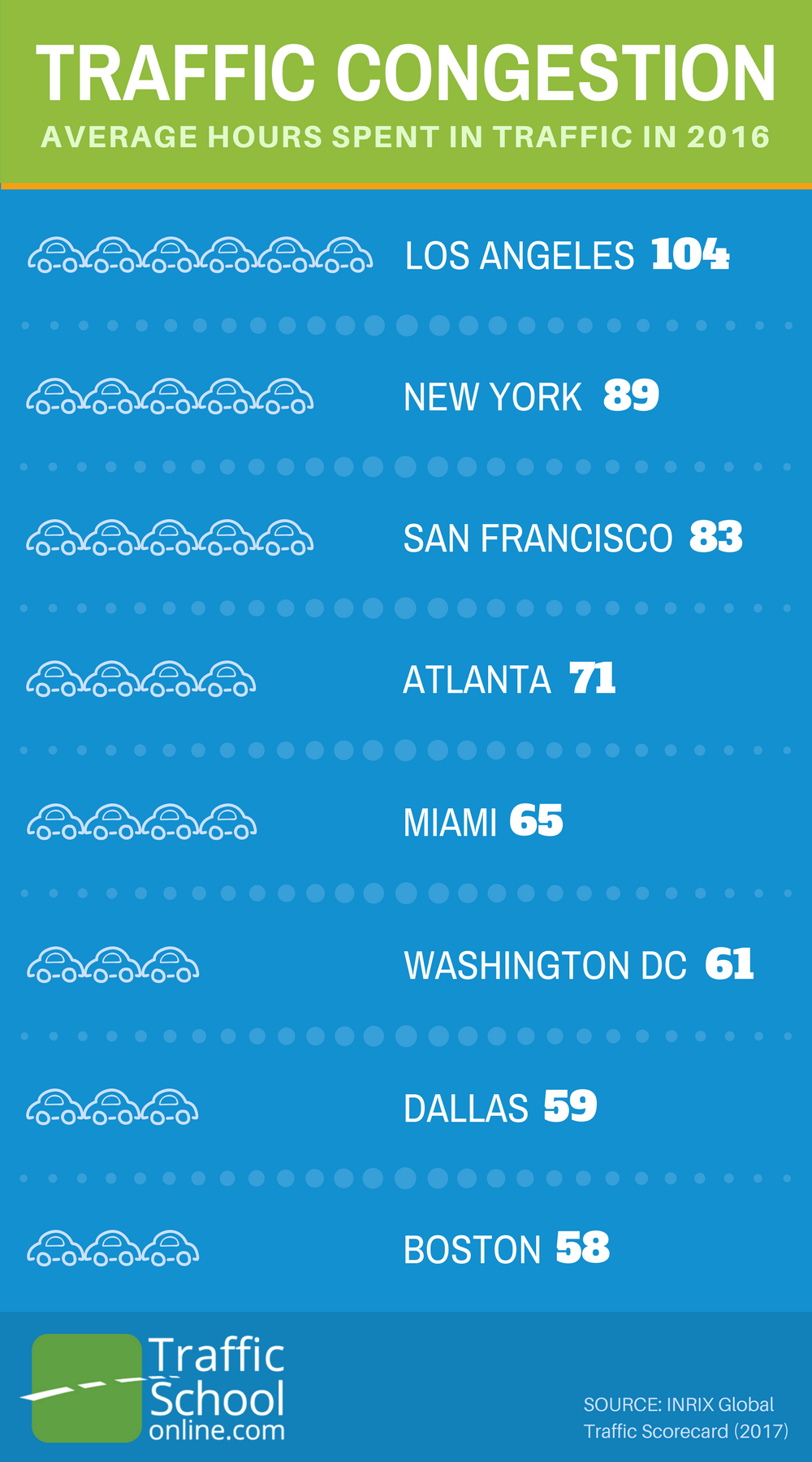
How does your city rank for traffic congestion? You might be surprised at the number of hours you spend stuck in traffic each year. The INRIX Global Traffic Scorecard has analyzed and ranked traffic congestion in 1,064 cities across 38 countries, in the largest ever study of its kind. Their aim was to determine both the financial impact of traffic congestion and the number of hours the average driver spends in traffic each year.

In this global study, 3 of the top 4 worst cities in the world for traffic were in the U.S., with Los Angeles coming in at the number 1 spot. They estimate that the financial cost of traffic congestion to the average Los Angeles Driver in 2016 was $2,408, totaling $9.7 billion for the entire city. Not to mention that on average, Angelenos each spent 104 hours sitting in traffic in 2016. New York, San Francisco, and Atlanta weren’t far behind, with 89, 83, and 71 hours respectively — each of these cities incurring upwards of $2.5 billion in costs relating to traffic congestion.

The study’s cost calculations involve the value of fuel and time wasted, as well as indirect costs of freight and company vehicles idling in traffic, which translate into higher prices for household goods.

Though the residents of these cities may spend a staggering amount of time stuck in traffic over a lifetime of commuting, and endure the associated financial costs, high levels of traffic congestion are an indication of a thriving economy. As lawmakers and private companies alike work to ease the gridlock and traffic congestion burdening drivers, progress is being made in the form of studies like this one, which provide insight into specific problem areas and budget prioritization. Understanding when and where congestion is worst, and exactly how bad it is, can be considered the first crucial step in solving the dilemma.

Though the research, diagnosis, and correction of these issues is a long and daunting task for government and transportation officials; there are things that every driver can do now to help reduce the effects of traffic congestion on their time and wallets. Simple strategies include taking advantage of carpooling to share expenses, or planning routes in advance to reduce time spent in traffic. You can use strategies to reduce other driving-related costs and reclaim some of the costs lost to traffic. Shopping insurance quotes regularly, taking safe driver courses to reduce insurance costs, and using fuel perks or reward cards can all help to negate the cost of traffic congestion and free up hundreds of extra dollars annually for drivers.


Traffic Congestion Infographic